July 2, 2003
VCU scientists awarded NIH grant to study usefulness of noninvasive procedure to measure hardening of the arteries
Share this story
RICHMOND, Va. – A team of Virginia Commonwealth University scientists has been awarded a three-year, $877,000 grant to evaluate the usefulness of a new magnetic resonance imaging method they developed to measure hardening of the arteries.
The information gathered in the study is valuable because research has shown that arterial stiffening is an important risk factor for future cardiovascular problems, such as coronary heart disease.
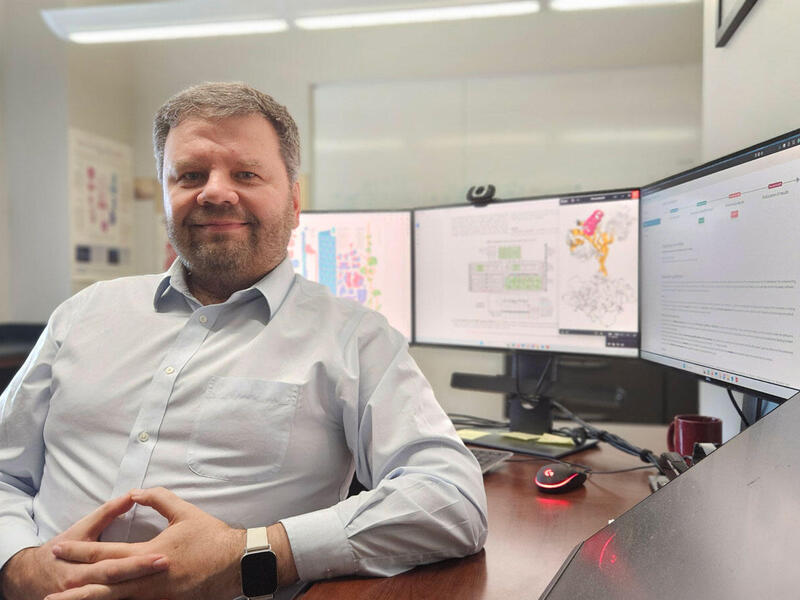
"We've designed the study to examine the link between aortic rigidity and age, degree of physical fitness and severity of high blood pressure," said Kenneth A. Kraft, Ph.D., associate professor of radiology in the VCU School of Medicine. "We are also measuring blood cholesterol, blood glucose and other traditional markers of cardiovascular risk."
A healthy aorta expands to absorb the systolic ejection of blood from the left ventricle of the heart, and then contracts during diastole to maintain flow to the body and to the heart muscle itself. This repeated expansion and relaxation of the aorta helps the heart pump efficiently and also helps smooth out blood pressure extremes. It is suspected that hardening of the arteries is associated with a number of factors including aging, sedentary lifestyle, high sodium intake and several diseases with cardiovascular involvement, like hypertension and diabetes.
Key to the study is a new noninvasive procedure, developed by Kraft, to measure the degree of hardening of the arteries. The test uses MRI, magnetic resonance imaging, to provide physicians with a snapshot of a patient�s future risk for coronary disease and hypertension.
"There currently exists no universally accepted method to measure aortic rigidity, except using invasive surgical procedures. The main advantages of our MRI method are that it is noninvasive, accurate, and once the patient is properly positioned, only takes seconds to complete," said Kraft, the project's lead investigator. "The target vessel is the thoracic aorta, which is precisely the artery whose rigidity we are most concerned about."
Investigators are recruiting 300 male and female volunteers for the study, ages 21 to 90. In addition to the MRI measurement, the protocol includes an exercise test, a general health questionnaire and several blood pressure measurements. Completing the protocol requires two visits to the medical center and a total of about two hours per subject.
The study involves a multidisciplinary team of VCU physicians and researchers, including James A. Arrowood, M.D., associate professor, cardiology division, internal medicine, School of Medicine; Ding-Yu Fei, Ph.D., associate professor, biomedical engineering, School of Engineering; Stephen W. Harkins, Ph.D., professor, gerontology, School of Allied Health Professions; hypertension specialist Domenic A. Sica, M.D., professor, nephrology division, internal medicine, School of Medicine; Robert E. Johnson, Ph.D., associate professor, biostatistics, School of Medicine.
For more information or to register interest in participating in this study, please visit the project website (http://www.aortastudy.vcu.edu) or contact the study coordinator at (804) 628-1750.
Subscribe to VCU News
Subscribe to VCU News at newsletter.vcu.edu and receive a selection of stories, videos, photos, news clips and event listings in your inbox.