June 22, 2004
VCU sponsors summer forensics and wildlife workshops
Share this story
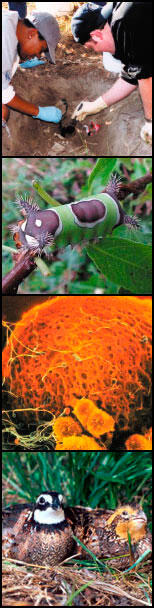
This summer, many Virginia science teachers will live out their "CSI" fantasies, dive into aquatic entomology and explore the state's diverse wildlife during a series of week-long workshops sponsored by Virginia Commonwealth University and the Virginia Department of Game and Inland Fisheries. The four workshops are designed to provide teachers with ideas to enhance their students' classroom experience while earning graduate credit at VCU.
The first of these workshops - "Virginia Woods, Waters and Wildlife" (July 12-16) - is designed for middle and high school science teachers. The 40-hour, hands-on program will introduce a selected group of 20 teachers from across the Commonwealth to birds, mammals, reptiles, fish and the principles and technologies used to manage and conserve these populations.
Professional wildlife biologists and environmental scientists will present
the ecology and
life histories of Virginia wildlife. Teachers will participate in field
trips to the VCU Rice Center for Environmental Life Sciences and other
locations to gain hands-on experience in the methods used by biologists,
wetlands scientists and wildlife managers. Teachers also will be introduced
to and work with cutting-edge technologies, such as Global Positioning
Systems and Geographic Information Systems, that are increasingly used
to study and manage wildlife populations and habitats.
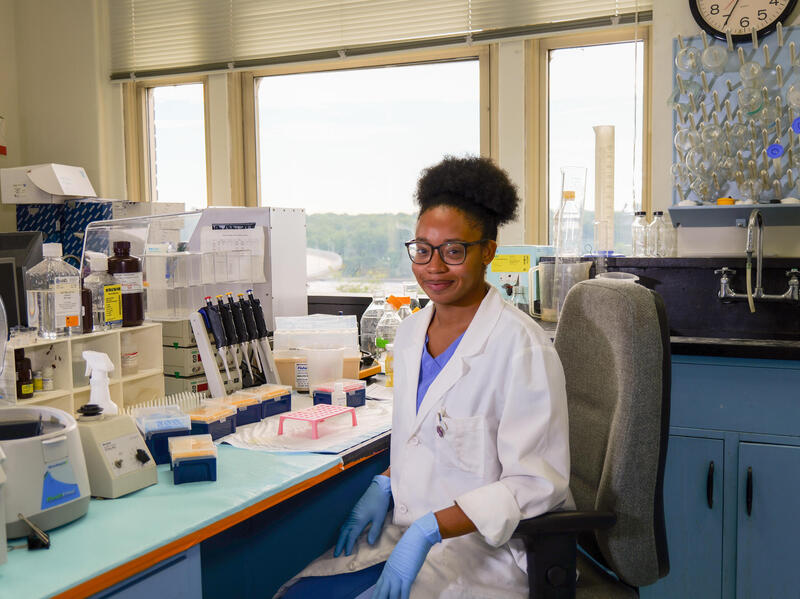
During "Bugs, Bones & Botany(r)" (July 19-23) and "DNA, Drugs and the Law" (July 26-30), scientists will lead participants through mock crime scenes to properly collect and preserve evidence, a laboratory to analyze the most frequent type of evidence, and a mock courtroom to discuss legal issues concerning the evidence.
The "Dragonflies, Dipnets and Digital Data" (July 26-30) workshop will immerse teachers in the hands-on collection of biological and chemical data at VCU's new field station on the James River. They will learn about the ecology of aquatic environments, and the roles aquatic insects play in biomonitoring and water quality testing. Many activities will take place outside in VCU's Rice Center for Life Sciences - a 342-acre wooded site overlooking the James River in Charles City County.
Participants also will learn various field techniques for gathering and processing insect, fish, chemical and physical data to assess water quality. Back in the laboratory, they will learn how to identify and preserve aquatic insects to create a collection. Then for a landscape view, they will use Global Positioning Systems and Geographic Information Systems technologies to locate, map and evaluate sampling site data from a water quality perspective.
Subscribe to VCU News
Subscribe to VCU News at newsletter.vcu.edu and receive a selection of stories, videos, photos, news clips and event listings in your inbox.