April 2, 2003
VCU's Ginder, Dewey honored as outstanding scientists of 2003
Share this story
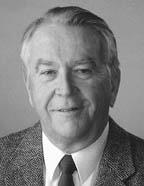
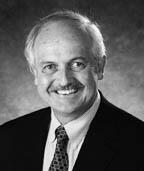
RICHMOND, Va. – Two Virginia Commonwealth University scientists have been honored as top contributors in science, especially for their research into molecular therapy for cancer and blood diseases and breakthroughs in the treatment for sudden infant death syndrome. Dr. Gordon D. Ginder, director of the VCU Massey Cancer Center, and Dr. William L. Dewey, VCU pharmacology professor and Pharmacology Department vice chairman, received Virginia’s Outstanding Scientist and Lifetime Achievement awards April 1 at the Science Museum of Virginia.
Ginder and Dewey were among eight honorees named by the Science Museum of Virginia and Gov. Mark R. Warner as Outstanding Scientists and Industrialists of 2003.
“Our honorees have made advances that touch our lives,” said Dr. Walter R.T. Witschey, director of the Science Museum of Virginia. In announcing the award winners, Gov. Warner said, “Their creativity, contributions and dedication are aimed at making life – in Virginia and beyond – better for us all.”
VCU President Dr. Eugene P. Trani described the honorees as pioneers in the revolution of the 21st century – the life sciences. “The accomplishments of Dr. Ginder and Dr. Dewey are testimony to VCU’s place at the forefront of universities nationally in life sciences research and education,” he said.
Discoveries from Dr. Gordon D. Ginder’s research have contributed to a new area of genetic research called epigenetics – going beyond changes to the DNA base code to study modifications of DNA and the surrounding proteins found in chromosomes that turn genes on and off. A major discovery attributed to Ginder is that a modification of DNA called methylation is associated with inactivation of gene expression. It is believed that methylation of cancer related genes may be a more common mechanism than gene mutation for causing cancer, and therefore it is now a recognized target for developing treatment of resistant cancers and may some day be a target for molecular prevention of cancer.
Ginder’s research on another type of epigenetic signal known as histone acetylation has led to clinical trials of butyrate – a naturally occurring fatty acid – that has been shown to be effective in treating some cases of common genetic blood disorders such as sickle cell anemia and beta-thalassemia.
Ginder’s research group recently made discoveries about the regulation of a set of genes, called histocompatibility genes, that control the body’s immune system response to cancer and transplanted cells – what mechanisms regulate different members of the particular member of the gene family. Understanding gene-specific mechanisms sets the stage for more successful anticancer immunotherapy and bone marrow transplantation.
Ginder came to the VCU Massey Cancer Center in 1997.
Dr. William L. Dewey, presented with Virginia’s Life Achievement Award in Science, has devoted his 36-year laboratory career to understanding the mechanisms through which drugs alter brain chemistry as they produce addiction, respiratory depression, relief of pain and changes to the cardiovascular system. Dewey’s early findings have established major research agendas for academia and industry that continue today.
Dewey’s significant achievements include determining how the active ingredients of marijuana and opiates alter brain functions as they are abused or used appropriately to treat diseases and relieve pain. Dewey’s laboratory was the first to prove that the tremendous tolerance to marijuana developed following chronic exposure was due to the brain’s adaptive mechanisms. Now Dewey and his colleagues are pursuing the subcellular basis for the development of tolerance and dependence to marijuana and morphine.
Another major achievement is the discovery by Dewey and his colleague, Dr. Edwin Myer of VCU’s Neurology Department, that infants at risk for SIDS (sudden infant death syndrome) have an overactive endorphin system. This led to their development of a treatment for SIDS that has been used internationally.
Dewey served as the leading research and graduate studies administrator at VCU for 12 years. The university research budget nearly tripled during his tenure and the Carnegie Foundation improved the classification of VCU to a Research I Institution, its highest designation. The graduate school significantly grew at this time and Dewey played a major role in the initiation and early development of the Virginia Biotechnology Research Park.
Throughout his career, Dr. Dewey has presided over and held other leadership roles in many national and international scholarly societies and has worked successfully with both state and federal government to improve funding and other conditions affecting biomedical research.
Dr. Dewey joined VCU in 1972.
Subscribe to VCU News
Subscribe to VCU News at newsletter.vcu.edu and receive a selection of stories, videos, photos, news clips and event listings in your inbox.