Feb. 19, 2026
DNA analysis illuminates the lives of East Marshall Street Well individuals
Share this story
She had brown eyes and black hair. She was almost 5 feet, 7 inches tall and chewed tobacco. She was in her 20s, carried heavy loads with her left arm and had given birth.
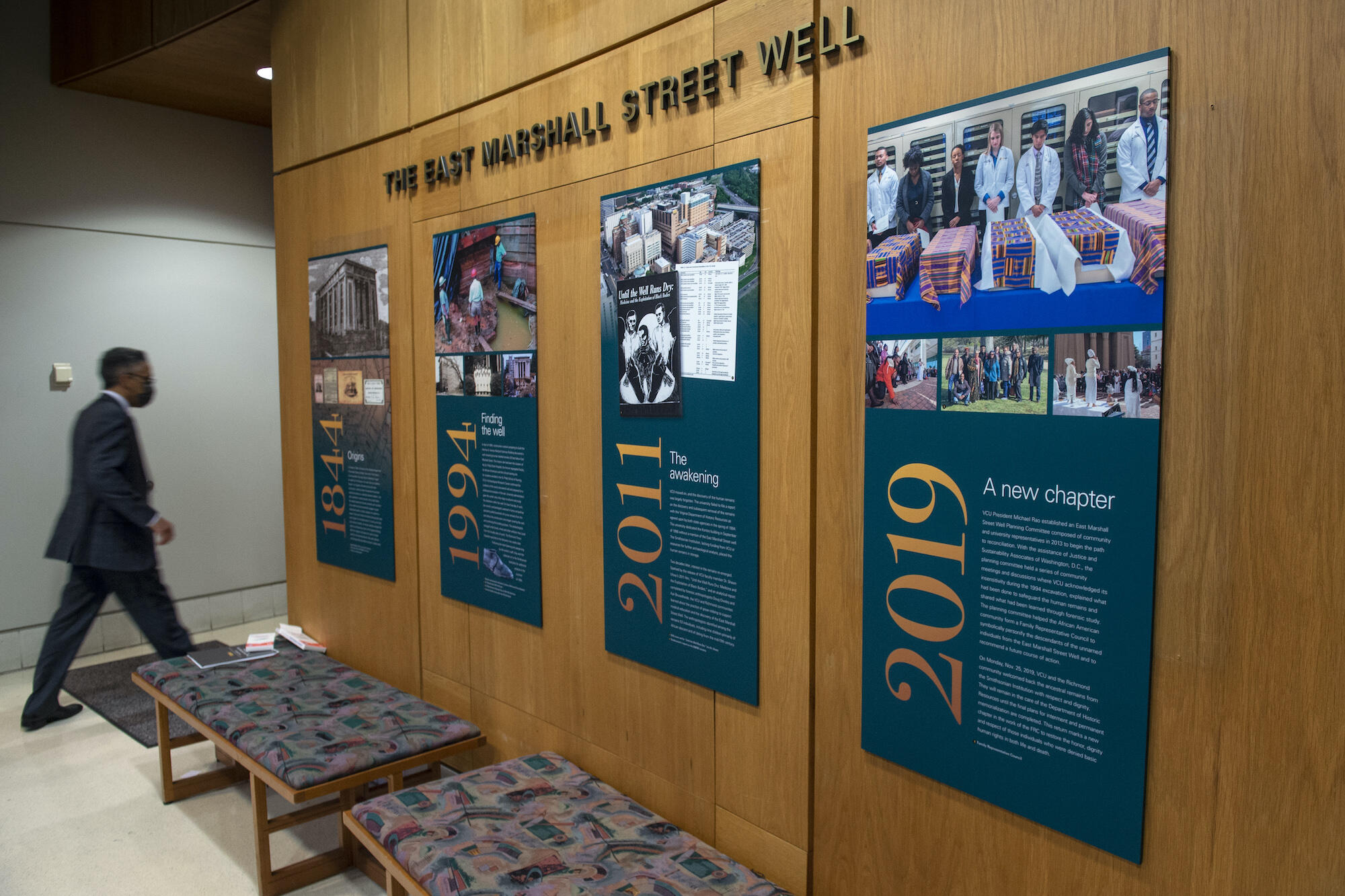
We don’t know her name, but after her death in the 19th century, her body was stolen and used for anatomical and surgical training by students from the Medical College of Virginia. For over 100 years, she lay among at least 46 others in a disused well on East Marshall Street in Richmond, before it was hurriedly excavated in 1994 during construction of the Hermes A. Kontos Medical Sciences Building on Virginia Commonwealth University’s campus.
Now, VCU researchers have completed new DNA analysis to find out as much as possible about the human remains excavated from the East Marshall Street Well, which were returned to Richmond in 2019. The results reveal ancestral information and physical descriptions of the majority of the individuals excavated from the well, painting more detailed pictures of their lives and identities.
This research continues the aim of the East Marshall Street Well Project – ensuring that the remains, primarily of African descent, receive appropriate study, memorialization and reburial, reflecting the dignity they were denied in life and death – and it carries out the project’s research recommendations. Additional work to memorialize and inter the individuals is ongoing.
“From a community perspective, this information will be really helpful for memorializing them,” said Baneshwar Singh, Ph.D., an associate professor in VCU’s Department of Forensic Science in the College of Humanities and Sciences, who helped lead the new research. “These individuals did not get justice after death, but at least they will be recognized as individuals.”
When the remains were excavated in 1994, DNA analysis of human remains was still in its infancy. At that time, the remains were sent to the Smithsonian National Museum of Natural History, where researchers matched together the remains’ long bones and concluded that they likely consisted of 44 adults and nine children. They also determined that most of the remains belonged to individuals of African ancestry.
And while those investigations were scientifically sound, they were limited by time and funding. By carrying out a more thorough anthropological and DNA analysis, the VCU team hoped to verify the earlier work and find out more about the remains and the people they belonged to.
“Previous research on other types of bone assemblages has shown that usually when you do that visually and metrically, they’re correct somewhere between 80 and 85% of the time,” said Tal Simmons, Ph.D., who helped lead the initial analysis of the remains as a professor of forensic science at VCU, and who now holds appointments at the Hebrew University of Jerusalem and Israel’s National Institute of Forensic Medicine. “But we wanted to do better than that.”
DNA leads to answers
After returning to Richmond in 2019, the remains were stored in the Virginia Department of Historic Resources until the VCU forensic scientists could begin work. The team’s first goal was to assign each of the bones and skeletal fragments to an individual through DNA analysis.
“When we’re looking at DNA, we know that this genetic information that we have is passed from our parents, and this is what makes us unique,” said Filipa Simão, Ph.D., an assistant professor of chemistry and forensic science at Towson University and a former VCU postdoctoral scholar who carried out DNA analyses of the remains alongside several VCU graduate students. “So this means that all of the cells that we have within our human body contain the same DNA. Any bones in our body will have the same genetic information.”
Since the remains and their DNA had been degraded by time and the damp, unprotected conditions of the well, the researchers used two kinds of DNA analysis to match them together.
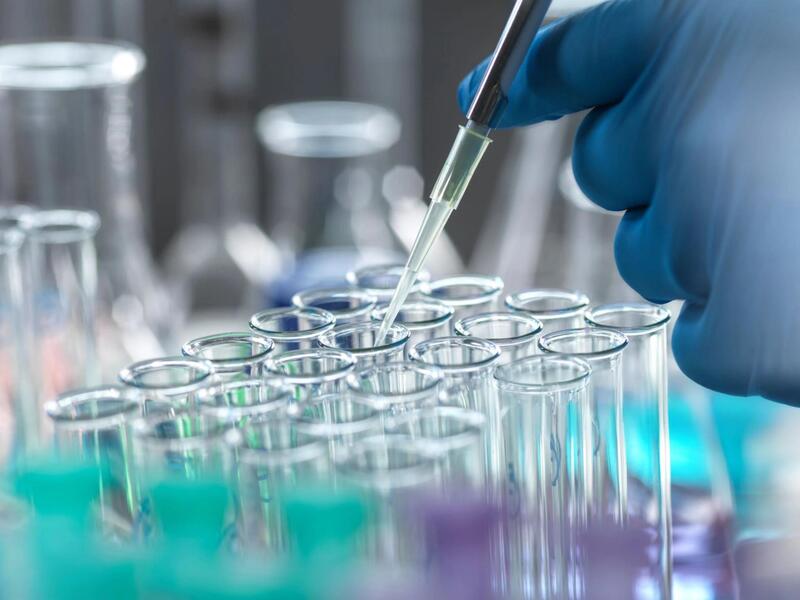
Most human cells contain an individual’s complete human genome, consisting of a full set of DNA-based instructions for that person’s physical characteristics, growth and development. Genomes also contain short repeating sequences of DNA, called short tandem repeats, which are unique to each person. By identifying patterns of those short repeating sequences within the individuals’ genomes, the VCU team was able to match together bones belonging to the same individual.
When the researchers were not able to match bones using short tandem repeats, they used shorter sequences of DNA. Those sequences, called insertion null alleles, are harder to pinpoint to specific individuals but are also less vulnerable to environmental degradation.
“These individuals did not get justice after death, but at least they will be recognized as individuals.”
Baneshwar Singh, Ph.D.
Through those genetic analyses, the researchers reassociated the remains of 33 individuals, including three juveniles. An additional two individuals were identified by studying the microbiomes of their calcified dental plaque – which revealed a bacterium that causes syphilis, a common ailment in the 19th century – and through physical anthropological analysis.
In total, the researchers estimated that the remains included a minimum of 43 adults and three children, from younger than 10 years old to between 64 and 84 years old.
The researchers also read specific segments of the individuals’ genomes to predict their hair and eye colors, and they found out more about the individuals’ ancestral roots by examining genome segments containing maternal and paternal DNA.
The researchers found that most of the individuals were of African ancestry, two were of mixed European and African ancestry, and one was of European ancestry. The team was able to further identify the likely regional ancestral origins of several of the individuals through their inherited maternal and paternal genetic information, pinpointing those individuals’ ancestral origins to either Central West Africa or Eurasia.
Novel melding of DNA and anthropology techniques
The study may be the first ever to use this specific combination of anthropological evidence and DNA analysis to reassociate human remains.
“This is really one of the first studies that has ever looked at the anthropology with three different types of genetic ancestry, and those things actually all agreed,” Simmons said. “This really shows that it all gels together very nicely.”
The researchers’ work also included anthropological analysis of the individuals’ bones and teeth, which revealed dental issues, involvement in physical labor, old injuries and evidence of disease, among other medical conditions. They also confirmed that the individuals’ bodies had been dissected after their deaths, verifying that the individuals were victims of 19th-century medical grave-robbing practices that primarily targeted Black Americans.
For Simmons, being able to separate the remains into discrete individuals and identify some of their unique characteristics has been the team’s most meaningful finding.
“For me, I think the most important thing that we did was to really give these people back their individualization, from being just co-mingled bones to really being able to talk about 35 people,” she said.
The remains have been returned to the Virginia Department of Historic Resources, where they will be stored until burial plans are finalized.
Subscribe to VCU News
Subscribe to VCU News at newsletter.vcu.edu and receive a selection of stories, videos, photos, news clips and event listings in your inbox.