Nov. 20, 2025
He is putting addiction therapy in the hands, and headsets, of patients
Share this story
About Uncommon Heroes: This series shines a light on passionate and innovative people at VCU who are boldly tackling problems that others can’t or won’t.
Jarrod Reisweber has created a new world to address a harsh reality of addiction.
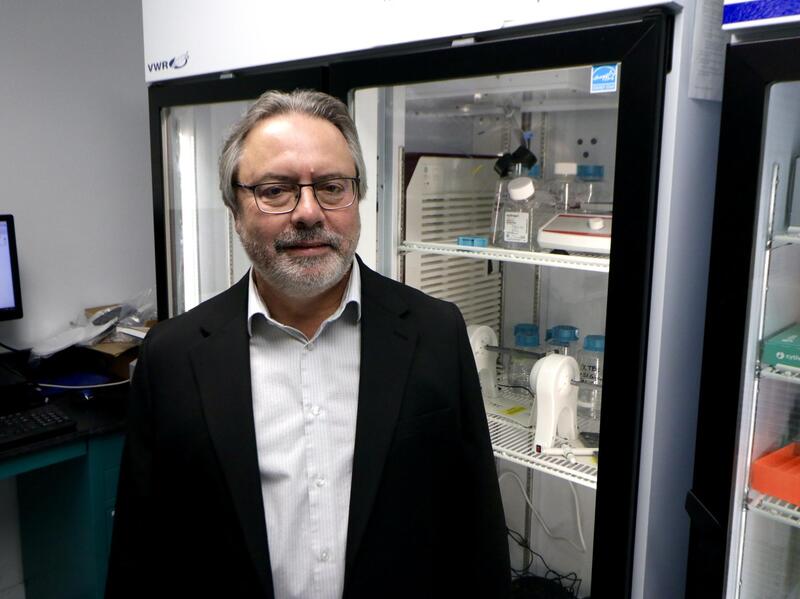
“It strikes at the most inconvenient times,” said Reisweber, Psy.D., an affiliate assistant professor of psychology in the College of Humanities and Sciences at Virginia Commonwealth University as well as a clinical psychologist.
A therapy session might happen at 2 p.m. on a Tuesday, but a craving or trigger pays no attention to the clock or calendar. Reisweber, who works closely with the Veterans Health Administration, saw how patients who are being treated for trauma, depression and substance use could benefit from support when they need it most – for example, in the middle of the night.
“Your therapist can’t always be there,” he said. “So we asked, what if the treatment could always be there?”
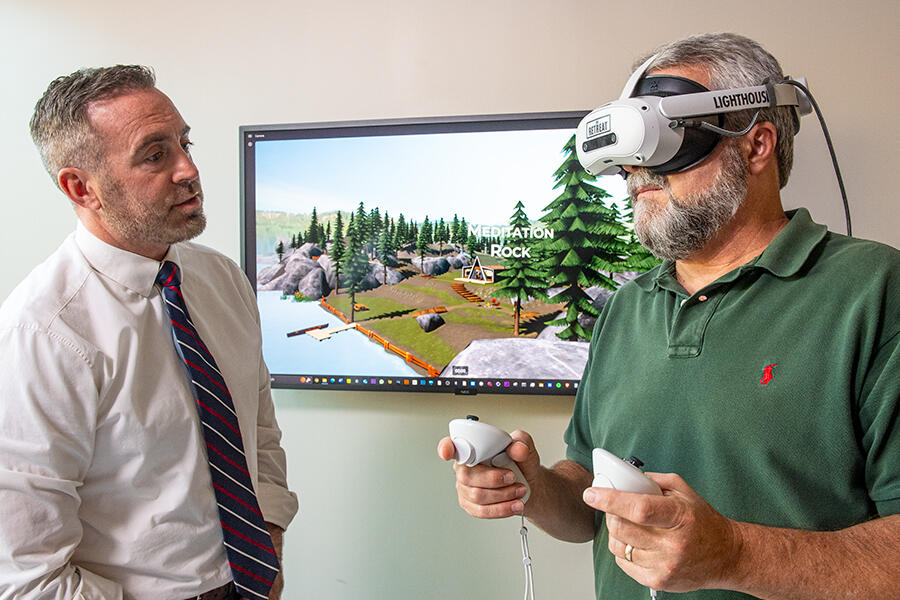
With support from VCU’s Office of the Vice President for Research and Innovation and by teaming up with game developer Lighthouse XR, Reisweber led development of Transcending Self Therapy VR, a virtual reality program based on his cognitive behavioral method called Transcending Self Therapy. Patients put on a VR headset and are transported to a lakeside cabin, and amid the calm surroundings, dozens of sessions (guided by Reisweber himself) help them quiet cravings, develop coping strategies and connect with others in recovery.
“It’s not meant to replace therapy,” Reisweber said. “It’s meant to extend it – to be there at 2 a.m. when the trigger shows up.”
TST VR extends therapeutic support in the larger sense, too: It could be available anywhere, anytime, to anyone who might benefit.
TST VR is proving successful, as patients using the VR program have been significantly more likely to complete treatment than nonusers. The approach is also being refined for wider use.
The video below shares the story of an uncommon hero who is blending technology and the human touch to help patients.
“In VR, we can be there when the human therapist can’t,” Reisweber said. “That’s the power.”
Subscribe to VCU News
Subscribe to VCU News at newsletter.vcu.edu and receive a selection of stories, videos, photos, news clips and event listings in your inbox.