Aug. 17, 2026
Here are updated tips, figures, projects and more for a key VCU priority: Pedestrian safety
Share this story
A new academic year brings thousands of students, faculty and staff back to Virginia Commonwealth University – and with them, an influx of foot traffic day and night.
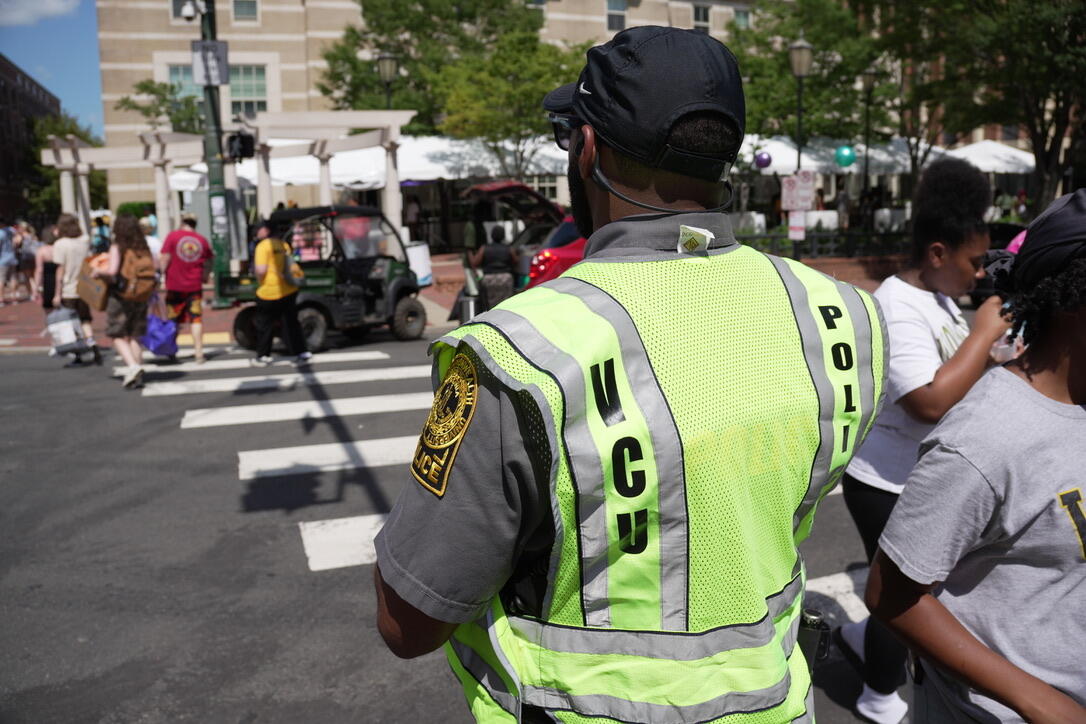
VCU’s downtown Monroe Park and MCV campuses are among Richmond’s busiest areas for pedestrian traffic, but each month, they also share the road with an estimated 2 million vehicles that pass through. That means every traveler – whether by foot or by wheel – must take pedestrian safety seriously.
Here are seven tips for crossing
No matter their mode, all travelers share a relationship on the roadway, and each decision they make impacts the safety of others as well as themselves.
Pedestrians, no matter the route or the time of day, should keep these practices in mind when traveling through VCU’s footprint in downtown Richmond:
- Cross only at crosswalks or intersections. Visibility is crucial, and controlled intersections with pedestrian signals and marked crosswalks are the safest bet. Don’t follow others who are crossing when or where they should not.
- Know the right-of-way. At signaled intersections, pedestrians must follow the traffic signals. At marked crosswalks not controlled by signals, Virginia law requires drivers to yield to pedestrians who have entered the crosswalk.
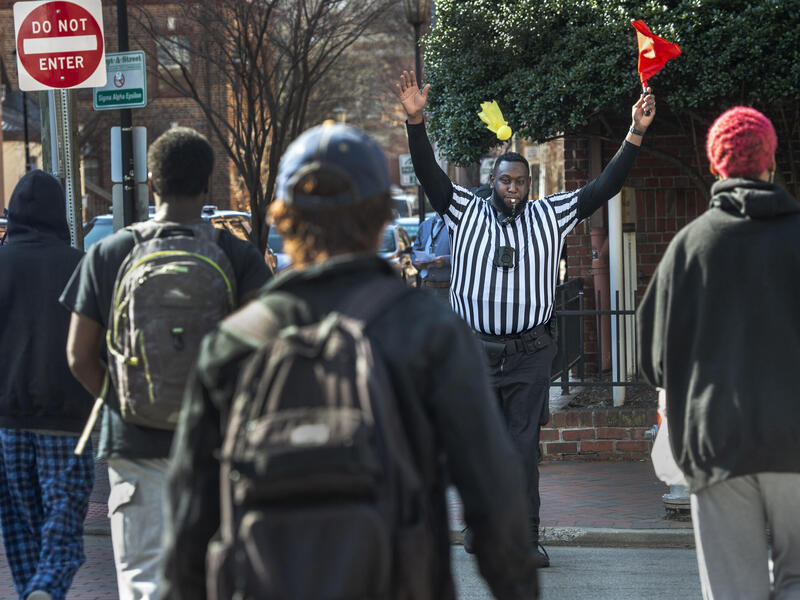
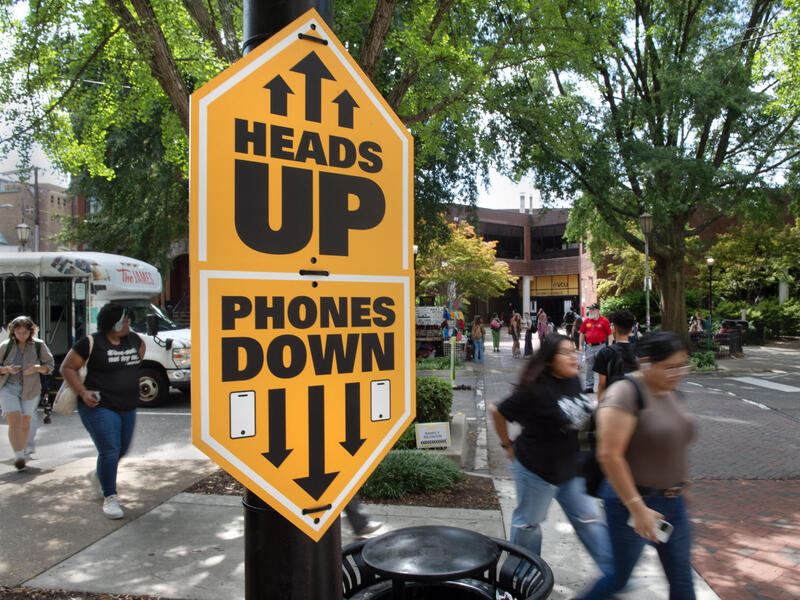
- Distractions = danger. Devices, conversations, food, whatever: Anything that takes your focus away from the roadway when crossing limits your ability to respond to danger. Keep your head up, phone down and headphones off when crossing the street – every single time.
- Use your senses. Does it look like that car is not slowing down? Do not cross. Does it sound like an engine is accelerating nearby? Find out before moving forward. Always keep your eyes and ears scanning. Assume drivers will do the wrong thing.
- Count to three. Most pedestrian-vehicle crashes on VCU’s campuses happen within the first few feet of an intersection. Three seconds gives you a moment to look again, see what’s moving and know what’s around you before you step into the street. Three seconds can change what you see.
- Don’t “creep.” When waiting to cross the street, stay on the sidewalk or landing near the road. Inching into the travel lane while vehicles have the right-of-way is against the law (Va. code § 46.2-926) as well as incredibly unsafe. Stay back to stay intact.
- Dress to be seen. Particularly at night, bright or reflective clothing allows drivers to better see you. Give them every chance from as far away as possible.
These numbers tell a story
Despite the shared responsibility among travelers, dozens of pedestrians are struck by drivers near VCU’s downtown campuses each academic year. Last year, there were more than 50 vehicle crashes/incidents reported to VCU Police that involved a pedestrian, cyclist or scooter rider:
- 39 pedestrian-involved incidents.
- 10 bicycle-involved incidents.
- Nine scooter-involved incidents.
Lt. Edgar Greer, commander of the VCU Police traffic division, said VCU is committed to the city of Richmond’s Vision Zero mission to eliminate traffic fatalities and severe injuries – and the belief that every serious crash is preventable.
While the circumstances of each incident can vary, Greer said that from his 20-plus years of working crash scenes near VCU, the outcome for the people involved is almost always the same.
“Every pedestrian who is hit by a driver – and the person behind the wheel – has their life changed forever,” he said. “Even when the physical injuries are less severe, the mental harm is still there. We don’t want that for anyone, so we’re asking for the community’s help.”
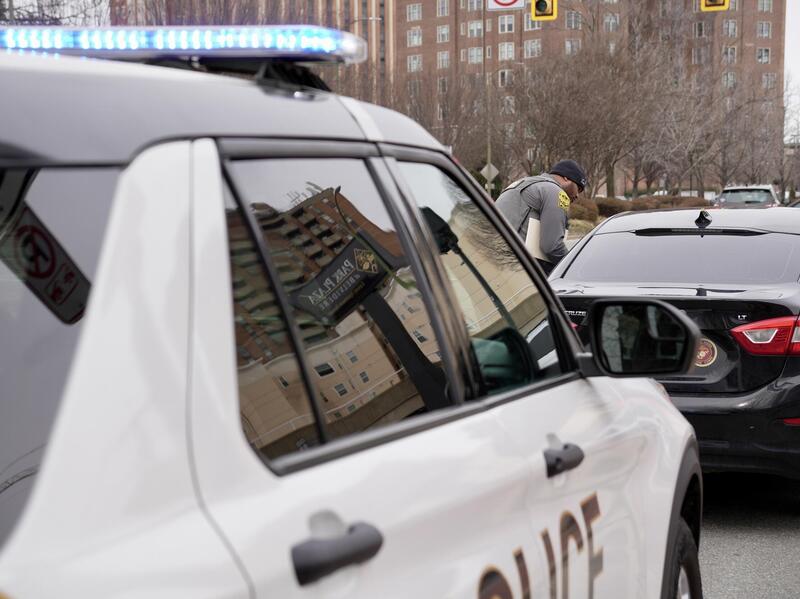
Following a noticeable uptick in pedestrian-related incidents near VCU around the holidays last year, VCU Police took action. During Operation Safer Street, the department issued 1,760 traffic summons over a 90-day period. VCU Police doubled the number of dedicated traffic officers to target dangerous driving behaviors and tracked the data to identify problem spots within the jurisdiction.
As a result of the sustained enforcement, VCU Police issued 4,511 traffic summons last academic year – a 154% increase over the previous year – and made more than 5,600 traffic stops.
Greer’s traffic division is working closely with the department’s crime analysis team to leverage the data and inform where his officers focus their daily efforts this school year.
“Trust me on this, our officers are doing everything they can to make the streets safer for pedestrians and, frankly, anyone traveling through our area,” he said. “What the numbers tell us is that plenty of people are not getting that message yet. It takes a sustained effort by everyone all the time to solve this problem.”
Here is how VCU is taking action
Over the past three years, VCU has worked closely with the city of Richmond’s Department of Public Works to plan, fund and implement a set of pedestrian safety features to calm traffic speeds near the academic and medical campuses. (Read an updated list of the completed and planned projects on this master plan page.)
Jeff Eastman, university planner and part of the pedestrian safety working group, said VCU has invested millions to improve conditions for pedestrians. That commitment, from both VCU and the city, remains strong.
“Mobility and Safety is one of the six guiding principles of the One VCU Master Plan, and we continue to research and work with the city to implement improvements that promote walkable, accessible, safe campuses that are easy to navigate for the entire VCU community,” he said.
As the academic year begins, pedestrians near VCU’s campuses may notice several completed or ongoing projects:
- Additional permanent curb extensions. These curblike roadway treatments extend the sidewalk area into the street to eliminate illegal corner parking and enhance pedestrian visibility at an intersection. At least 10 intersections across both downtown campuses are scheduled to receive this upgrade.
- New speed tables near the MCV Campus. The “speed humps,” which slow vehicles, have been installed at two new locations: Sherwood Avenue by the Virginia Treatment Center for Children as well as Marshall Street between 12th and 13th streets.
- Red light camera enforcement at Belvidere and West Cary streets. Drivers who run red lights at this intersection can be cited through the city’s safety camera program, an automated system that captures images or video of vehicles that enter an intersection after the signal has turned red.
- “Scramble” intersection at 11th and East Broad streets. This upgrade provides a dedicated “all-walk” crossing phase to reduce conflicts between pedestrians and turning vehicles.
- Audible crosswalk signals near the MCV Campus. Several intersections along East Leigh Street will soon be equipped with audible crossing warnings to help pedestrians.
How can I support pedestrian safety?
Do the right thing every time you walk, bike or drive. Greer and Eastman agree that there needs to be a culture shift on roadways – turning away from personal convenience and toward community safety.
Since about a quarter of VCU’s student population is new every year, community members are encouraged to discuss travel safety and let friends or loved ones know when they are being unsafe.
Feedback is critical as well. Anyone who has a concern or spots a safety issue near VCU is asked to email traffic@vcu.edu. Include your name, contact information and detailed description of the problem.
There are a host of ways for the VCU community to engage with education and outreach related to pedestrian safety:
- VCU Police’s Pedestrian Safety Fair is set for Sept. 16 near VCU Medical Center. More information will be distributed soon.
- Digital engagement on screens around both campuses will highlight safety information for VCU community members.
- Follow VCU Police and VCU Parking and Transportation on social media for weekly #HeadsUpRams content related to travel safety. Submit content ideas or volunteer to help by emailing burnjhs2@vcu.edu and trubanoa@vcu.edu (subject line: #HeadsUpRams:).
Subscribe to VCU News
Subscribe to VCU News at newsletter.vcu.edu and receive a selection of stories, videos, photos, news clips and event listings in your inbox.